Structural Drying & Dehumidification in Canyon Country, CA
Surface-dry is not dry. The restoration crews run air movers and LGR dehumidifiers and monitor moisture daily until the structure reads dry, 24/7 across Canyon Country.
(661) 475-6557Tap the 24/7 Canyon Country dispatch line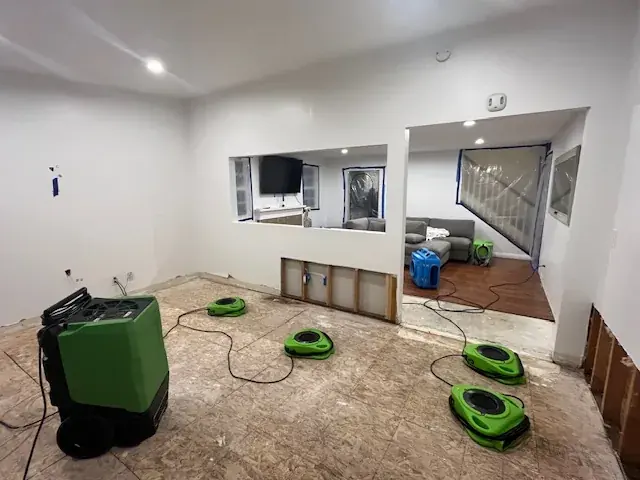
Why Canyon Country calls the local pros for structural drying
From the first pump-out to the last verified dry reading, the work follows the IICRC S500 standard.
Rapid local response
The response team answers 24/7, and the nearest crew heads out the moment you call, day or night, across Canyon Country and the east valley.
IICRC S500 drying standard
Trained crews run truck-mounted extraction, air movers, and moisture meters, drying to a verified standard, not a mop and a fan.
Claim-ready documentation
The loss is documented with photos and daily moisture readings, the paperwork an adjuster looks for to move a claim.
Local valley water experts
Canyon storm runoff, slab leaks, hard-water heaters, and post-fire debris flows: local crews know how water moves in a Canyon Country home.
What to do so your Canyon Country home dries properly
Surface-dry is not dry, so the goal is to get real equipment on the structure quickly.
- Get the standing water out. Extract or mop up what you can so drying can begin.
- Do not close it up wet. Hold off on repairs until the framing and slab read dry, or mold can start.
- Call for verified drying. The crew runs air movers and dehumidifiers and monitors to a dry standard, not a guess.
What does structural drying cost in Canyon Country, CA?
In Canyon Country, CA, structural drying typically runs $1,500 to $7,000, set by the materials that got wet, how saturated they are, and how many days of controlled drying it takes.
One area
- Air movers and a dehumidifier to a dry reading
Multiple rooms or a slab
- LGR dehumidifiers and mat drying, daily readings
Extensive saturation
- Long drying of slab, plaster, or hardwood
Documentation for your insurance claim
Most sudden water damage is covered. The restoration team documents the loss the way an adjuster needs it, with photos and daily moisture readings. Coverage depends on your policy, so it is worth checking with your own insurer. Want a number first? Try the Water Damage Cost Calculator for a Canyon Country range.
How structural drying & dehumidification is handled in Canyon Country
The same disciplined sequence on every job, so the water stops spreading and the drying is verified.
Call & dispatch
The response team answers 24/7, and the nearest Canyon Country crew heads out with pumps, air movers, and moisture meters.
Assess the loss
The crew finds the source and the full reach of the water, including what soaked into slab, subfloor, and wall cavities.
Extract & dry
The extraction crew pulls the standing water, then runs air movers and dehumidifiers to a verified dry standard, not just the surface.
Verify & document
Moisture readings are logged until the structure is dry, then the loss is documented with the photos and readings an adjuster needs.
More on structural drying in Canyon Country
After the water is out, the part you cannot see decides whether your home recovers or grows mold. Water soaks into drywall, framing, subfloor, and the concrete slab, and that trapped moisture has to be pulled out with real equipment. Structural drying is the science of doing that to a measured standard, not a fan and a hope. The restoration technicians set the right gear and monitor it daily until the structure actually reads dry across Canyon Country.
Why surface-dry is not dry
A floor that feels dry can hide days of moisture in the structure:
- Drywall and framing hold water long after the surface looks fine
- A concrete slab gives up moisture slowly over several days
- The dry valley air fools people into closing a wall up too soon
- A wet cavity that gets sealed becomes a mold problem within days
This is why the crews follow every extraction with metered drying. The CDC guidance on floodwater explains why fast, complete drying is what prevents mold after a water loss.
How the crews dry a structure
Crews engineer the drying to the materials and the space:
- Map the moisture with meters and thermal imaging to find every wet area
- Set air movers to move water out of surfaces into the air
- Run low-grain refrigerant dehumidifiers to pull that moisture out of the air
- Use mat systems to dry a slab or hardwood from within
- Take daily readings and adjust until the structure hits a dry standard
The crews only pull the equipment once the readings confirm it is dry, then document the drying log for your claim and any rebuild.
Water loss that needs proper drying? Do not close it up wet. A Canyon Country crew sets metered drying.
Call (661) 475-6557What proper drying saves you
Done right, structural drying protects the home and your wallet:
- It saves drywall, framing, and flooring that would otherwise be torn out
- It prevents the mold that follows a wall closed up wet
- It gives your contractor a documented dry standard to rebuild from
Restoration and the rebuild trades are regulated in California through the Contractors State License Board.
Ask to see the moisture readings
A reputable drying job is measured, not guessed. The technicians take daily meter readings and share them, so you can see the structure actually reaching a dry target before the equipment comes out and the rebuild begins.
Structural Drying & Dehumidification across Canyon Country and the east valley
The crews reach Canyon Country and the east Santa Clarita Valley, day or night.
From the heart of Canyon Country, the crews cover the whole east side of the valley, day or night, with rapid local response.
Coverage runs across Canyon Country, Sand Canyon, Fair Oaks Ranch, Mint Canyon, Saugus, Agua Dulce, and the east valley.
See every neighborhood and ZIP coveredRelated restoration services
Structural drying questions, answered
The questions Canyon Country homeowners ask most, answered straight.
Water in your home right now?
Do not wait for the FAQ. A local Canyon Country crew is standing by 24/7.
Call nowHow long does structural drying take?
Most homes dry in 3 to 5 days, though a saturated slab, plaster, or hardwood can take longer. The crews monitor daily and only stop once the structure reads dry, rather than pulling the gear on a fixed schedule.
Why not just use my own fans?
Household fans move surface air but do not pull moisture out of a slab, framing, or a wall cavity. Commercial air movers paired with dehumidifiers dry the structure itself, which is what stops mold from starting.
How do you know when it is dry?
The crews take daily moisture readings with meters and compare them to a dry standard for each material. When the readings confirm the structure has reached that target, the drying is done and the crews remove the equipment.
Is structural drying covered by insurance?
Yes, drying is a core part of covered mitigation after a sudden water loss. The daily readings and the equipment used are documented for the claim, and coverage depends on your policy, so it is worth checking with your own insurer.
Will the equipment be loud or in the way?
Air movers and dehumidifiers run continuously and do make noise, which is normal and necessary. The crews place them to dry efficiently while keeping the home as usable as possible, and remove them as soon as it reads dry.
A Canyon Country structural drying crew is standing by
Water sitting means damage spreading. Call Canyon Country Water Damage and a Canyon Country crew heads out across the east Santa Clarita Valley, day or night.
(661) 475-6557Call now, a valley team picks up day or night